Split Square 2 Clay Cutter STL Digital: Technical Specifications and Practical Application
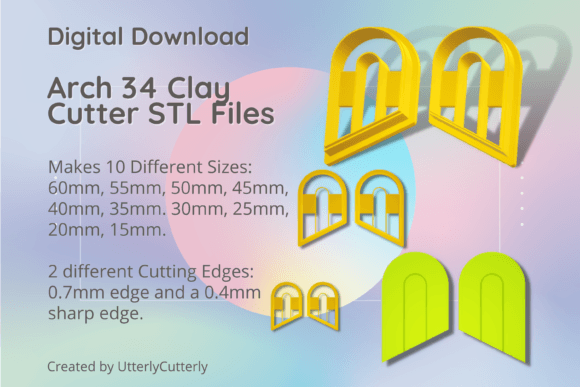
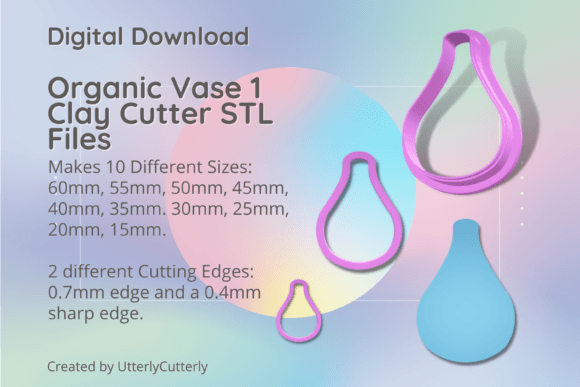
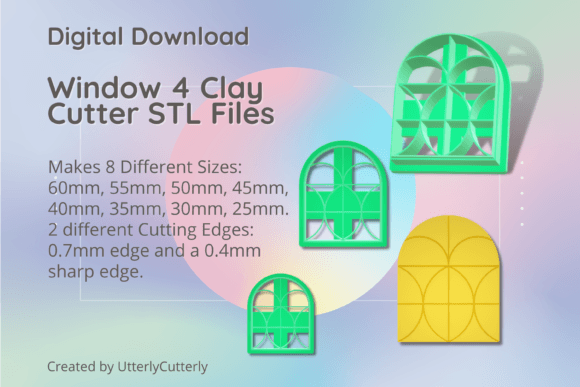
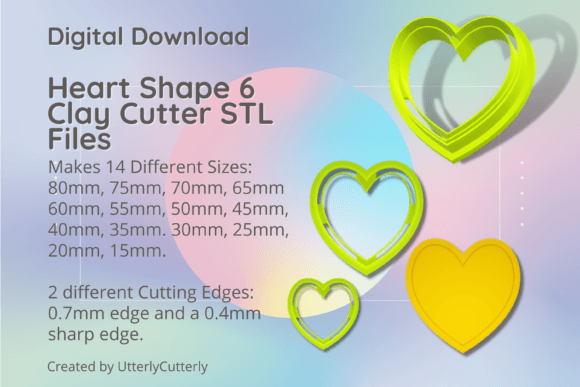
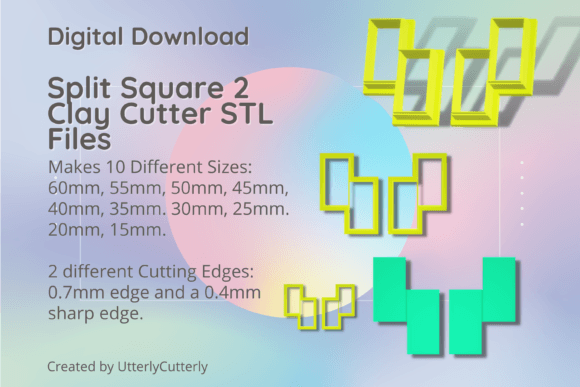
The Split Square 2 Clay Cutter - STL Digital represents a functional asset for makers who require geometric precision in polymer clay, ceramic, or cookie production. Unlike generic shape files, this digital bundle addresses specific workflow pain points regarding wall thickness, cutting edge sharpness, and size gradation. For professionals and serious hobbyists operating 3D printers, the value of an STL file lies not merely in the shape itself, but in its printability and performance during actual use. This pack provides ten distinct sizes ranging from 15mm to 60mm, alongside two specialized cutting edge profiles designed to accommodate different material viscosities and finishing requirements.
Evaluating digital fabrication files requires a shift in perspective from physical product reviews. When assessing the Split Square 2 Clay Cutter - STL Digital, one must consider layer adhesion, support requirements, and the mechanical interaction between the printed tool and the medium being cut. The inclusion of dual edge types within a single download demonstrates an understanding of varied maker needs, allowing users to select the appropriate tool geometry without sourcing multiple files. This versatility makes the bundle a practical addition to a digital library for those producing jewelry components, uniform confectionery, or mixed-media art.
Dual Edge Profiles and Material Compatibility
The most significant technical feature of this STL bundle is the provision of two distinct cutter variations. Understanding the difference between these profiles is essential for achieving clean results and preventing material waste. The files are categorized by wall thickness and edge geometry, each serving a specific purpose in the fabrication process.
Standard 0.7mm Wall Configuration
The standard version features a 0.7mm wall with a 3mm thick base and a total height of 12mm. This specification strikes a balance between rigidity and material efficiency. A 0.7mm wall is generally robust enough to withstand the pressure required for cutting firmer clays or doughs without flexing, yet thin enough to minimize drag. The 3mm base provides a comfortable grip surface and adds structural integrity to the top of the cutter, reducing the likelihood of layer separation during high-pressure use. This profile is typically the default choice for general-purpose polymer clay work where durability is prioritized over microscopic precision.
Sharp Edge (SE) Variant
Designated as "SE" in the file naming convention, the Sharp Edge variant utilizes a 1mm support wall tapering to a 0.4mm cutting edge. Despite having a thicker support structure, the reduced contact area at the cutting point allows for cleaner penetration through resistant materials. This geometry is particularly valuable when working with soft clays that tend to stick to wider walls, or when cutting detailed cookie dough where a thinner edge reduces deformation. The 1mm support wall ensures the delicate 0.4mm tip remains stable during printing and use, mitigating the risk of edge chipping that often plagues ultra-thin single-wall designs. Like the standard version, it maintains a 3mm base and 12mm height for consistency across the set.
Size Gradation and Workflow Integration
Consistency in sizing is critical for creators producing sets or nested designs. The Split Square 2 Clay Cutter - STL Digital includes ten incremental sizes: 60mm, 55mm, 50mm, 45mm, 40mm, 35mm, 30mm, 25mm, 20mm, and 15mm. Measurements are taken from the longest ends of the split square geometry, ensuring accurate scaling relative to other tools in your inventory.
This 5mm graduation step offers practical advantages in production environments. For jewelry makers, the range covers everything from substantial statement pendants (60mm) to delicate earring components (15mm). In culinary applications, the progression allows for tiered cookie sets or precise portion control. Having a complete, mathematically consistent set eliminates the guesswork involved in resizing files manually, which can sometimes distort aspect ratios or compromise wall thickness parameters. Furthermore, because these files are designed to integrate with other STL assets from the same ecosystem, makers can curate custom combinations without worrying about incompatible tolerances or mismatched aesthetic styles.
Printability and Technical Considerations
A digital file is only as useful as its successful translation into a physical object. These cutters are engineered for FDM/FFF 3D printing, with specific attention paid to bed adhesion and overhang management. The 3mm base serves a dual purpose: it acts as a brim-like structure to secure the print during fabrication and provides a flat reference surface for post-processing.
Users should note the specifications regarding embossing lines, if present in specific design iterations. Embossing features stand 10.5mm tall, meaning they are designed to interact with clay sheets thicker than 1.5mm. Attempting to use embossing cutters on thinner material will result in incomplete impressions or cutting through the substrate entirely. This dimensional constraint highlights the importance of matching tool specifications to material preparation. For optimal printing results with the SE variant, users may need to adjust cooling settings to ensure the fine 0.4mm tip solidifies rapidly without deforming, while the standard 0.7mm version typically prints reliably with standard PLA or PETG profiles.
Practical Value for Professional and Hobbyist Makers
The decision to acquire digital tooling rather than physical products involves trade-offs. The primary advantage of the Split Square 2 Clay Cutter - STL Digital is immediate access and indefinite reproducibility. Physical cutters wear down, break, or get lost; an STL file allows for on-demand replacement at the cost of filament and electricity. For small business owners and freelancers, this reduces long-term overhead and supply chain dependency.
However, digital acquisition shifts the quality control burden to the user. Success depends on printer calibration, material selection, and slicing expertise. Professionals who have already dialed in their machines will find this bundle highly efficient. Those new to 3D printing may face a learning curve, particularly with the Sharp Edge variant. The testing protocol mentioned by the creator suggests the files have been validated for printability, but local environmental factors and hardware variations always play a role. Users should expect to run test prints, especially when switching between the standard and SE profiles, to verify dimensional accuracy and edge quality before committing to production runs.
Evaluating Long-Term Utility and Versatility
Beyond the immediate utility of the split square shape, this bundle exemplifies a modular approach to digital crafting assets. The weekly release schedule of new STL files from this source indicates an active development pipeline, suggesting that current purchases are part of a growing, interoperable system rather than isolated downloads. For makers building a comprehensive tool library, this continuity matters. It allows for the gradual accumulation of compatible shapes that share similar base dimensions and wall thickness standards.
The versatility of the split square geometry itself warrants consideration. Unlike perfect circles or simple rectangles, the split square introduces dynamic negative space and angular interest that translates well across mediums. In polymer clay, it facilitates modern, architectural jewelry designs. In baking, it creates visually distinctive cookies that stand out from standard shapes. The ability to produce this shape in ten precise sizes, with two functional edge variations, provides a depth of utility that single-size physical cutters cannot match.
Ultimately, the Split Square 2 Clay Cutter - STL Digital serves users who view their 3D printer as a manufacturing tool rather than a novelty. It is best suited for those who understand their machine's capabilities and require reliable, dimensionally accurate tooling for repetitive creative tasks. While it demands a baseline level of technical competency to realize its full potential, the combination of thoughtful engineering, size variety, and dual-edge functionality makes it a pragmatic resource for serious digital fabrication workflows. Users should assess their current printing setup and material thickness standards against the provided specifications to ensure alignment with their production goals before downloading.