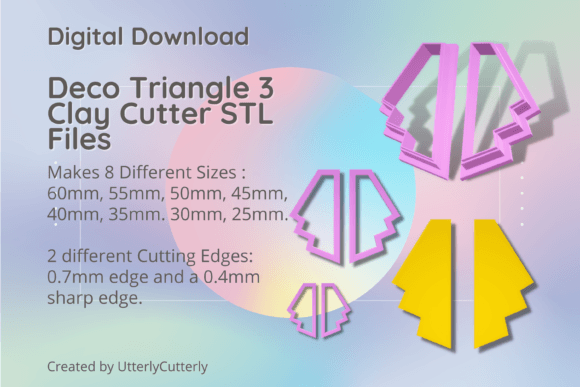
Deco Triangle 2 Clay Cutter - Fan STL Di: Strategic Asset for Digital Fabrication
The Deco Triangle 2 Clay Cutter - Fan STL Di represents more than a simple geometric tool; it is a foundational asset for creators integrating digital fabrication into physical product lines. For entrepreneurs, jewelry makers, and ceramicists operating in competitive markets, the ability to produce consistent, high-quality components on demand is a strategic advantage. This digital download bundle provides immediate access to a versatile cutting system designed specifically for polymer clay and cookie applications. By leveraging this STL file pack, makers can bypass supply chain delays associated with physical tools and establish an in-house production capability that supports rapid prototyping and scalable manufacturing.
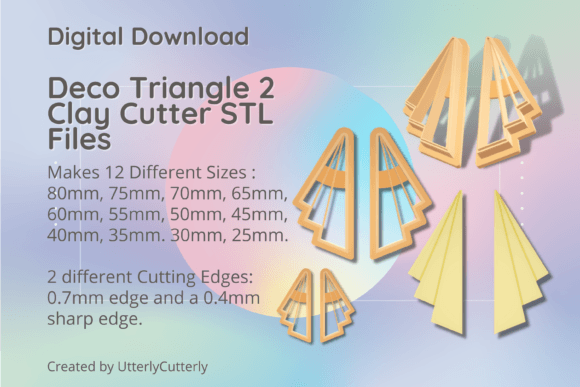
Strategic utility in creative manufacturing often comes down to precision and adaptability. The Deco Triangle 2 Clay Cutter - Fan STL Di addresses both by offering twelve distinct sizes ranging from 25mm to 80mm. This graduated sizing allows for intentional design planning rather than reactive creation. Whether you are developing a cohesive jewelry collection requiring nested elements or creating tiered cookie sets for events, having a mathematically consistent size progression ensures visual harmony. The inclusion of two distinct cutting edge profiles further enhances operational flexibility, allowing users to select the appropriate tool specification based on material properties and desired finish without purchasing redundant physical inventory.
Technical Specifications and Production Planning
Understanding the technical parameters of your digital assets is essential for minimizing print failures and maximizing output quality. The Deco Triangle 2 Clay Cutter - Fan STL Di is engineered with specific tolerances that dictate how they should be sliced and printed. Before adding these files to your production queue, review the two available cutter types to determine which aligns with your current project goals.
- Standard Wall Profile: Features a 0.7mm wall thickness with a 3mm thick base and a total height of 12mm. This profile offers increased rigidity and durability, making it suitable for stiffer clays or high-volume production runs where tool longevity is a priority.
- Sharp Edge (SE) Profile: Abbreviated as SE in the file set, this variant includes a 1mm support wall tapering to a 0.4mm cutting edge. It maintains the same 3mm base and 12mm height but prioritizes clean cuts and reduced material displacement. This is strategically superior for detailed work or softer materials where drag marks are a concern.
For projects involving surface texture, note that any embossing lines within the Deco Triangle 2 Clay Cutter - Fan STL Di design are 10.5mm tall. This specification requires a minimum clay thickness of 1.5mm to function correctly. Attempting to use embossing features on thinner sheets will result in structural failure or incomplete impressions. Incorporating this constraint into your standard operating procedures prevents wasted material and ensures consistent customer experiences.
Integrating Digital Assets into Creative Workflows
The transition from physical tool acquisition to digital asset management requires a shift in operational mindset. When utilizing the Deco Triangle 2 Clay Cutter - Fan STL Di, you are not merely downloading a shape; you are acquiring a manufacturing license. This distinction matters for business planning. Digital files allow for zero-inventory storage and instant replication. If a cutter breaks during a production run, a replacement can be printed in hours rather than days. This resilience is critical for meeting deadlines and maintaining professional reliability.
Furthermore, the fan-style geometry of this triangle cutter serves as a modular component in broader design systems. Because the sizes increment by 5mm steps (80mm, 75mm, 70mm, etc.), they integrate seamlessly with other standardized STL files in our ecosystem. Strategic creators use this interoperability to curate custom cutter combos that define their brand aesthetic. Rather than relying on generic, mass-produced shapes, you can combine the Deco Triangle 2 with complementary digital downloads to develop proprietary product lines that cannot be easily replicated by competitors using off-the-shelf tools.
Sizing Strategy and Application Context
Selecting the correct size from the 12-option range should be driven by end-use requirements rather than arbitrary preference. The measurement convention for the Deco Triangle 2 Clay Cutter - Fan STL Di is based on the longest ends of the triangle. Accurate interpretation of this metric prevents sizing errors during the design phase.
- Jewelry Applications (25mm–45mm): Smaller sizes in this range are optimized for earrings, pendants, and charms. The Sharp Edge (SE) profile is typically preferred here to minimize post-processing cleanup on delicate pieces.
- Mixed Media and Decor (50mm–65mm): Mid-range sizes serve dual purposes, functioning effectively for larger jewelry components, keychains, or decorative cake toppers. The standard 0.7mm wall provides necessary stability for these intermediate dimensions.
- Culinary and Large Format (70mm–80mm): The largest cutters are primarily intended for cookies or substantial clay slabs. Ensure your printer bed is leveled and calibrated for these larger footprints to maintain even pressure across the entire cutting edge.
Risk Mitigation and Quality Assurance
While digital fabrication offers significant advantages, it introduces variables that must be managed proactively. Relying on the Deco Triangle 2 Clay Cutter - Fan STL Di without proper calibration can lead to inconsistent results that damage brand reputation. Print orientation, layer height, and nozzle diameter all influence the final tool performance. Users should validate print settings against the recommended specifications before committing to full production batches.
Another strategic consideration is material compatibility. Not all polymer clays behave identically against 3D printed surfaces. Some formulations may stick to PLA or PETG, while others release cleanly. Testing the Deco Triangle 2 Clay Cutter - Fan STL Di with your specific clay body is a non-negotiable step in process validation. Documenting successful release agents or surface treatments creates institutional knowledge that streamlines future production and reduces dependency on trial-and-error methods.
Additionally, recognize that this is a digital product, not a physical item. Access is granted immediately upon payment, placing the responsibility of file management and backup squarely on the user. Implementing robust digital asset management practices ensures that your library of STL files remains accessible and organized. Losing access to core production tools due to poor data hygiene is an avoidable operational risk that can disrupt business continuity.
Long-Term Value and Scalability
The true ROI of the Deco Triangle 2 Clay Cutter - Fan STL Di emerges over time through repeated use and integration. Unlike single-purpose physical tools that depreciate, digital files retain their utility indefinitely. As your skills advance and equipment improves, the same STL file can yield progressively better results through refined slicing strategies and printer upgrades. This scalability makes digital cutters a sustainable investment for growing businesses.
New STL files are added to our store weekly, providing ongoing opportunities to expand your capabilities. Strategic operators monitor these updates not just for novelty, but for functional gaps in their existing toolkit. Building a comprehensive library of interoperable designs like the Deco Triangle 2 enables faster response to market trends and client requests. When a customer asks for a custom variation, having a pre-validated digital foundation reduces development time from weeks to hours.
Ultimately, the Deco Triangle 2 Clay Cutter - Fan STL Di is a tool for intentional creation. It rewards users who approach it with clear objectives and disciplined execution. By understanding its technical specifications, respecting its operational constraints, and integrating it thoughtfully into broader workflows, creators can transform a simple geometric file into a cornerstone of their production infrastructure. Success in digital fabrication is rarely accidental; it is the result of deliberate choices made at every stage from file selection to final finishing.