Column 8 Clay Cutter - Ancient Greek Rom: Digital STL Files for Versatile Crafting
Bringing classical architecture into modern maker spaces requires tools that balance historical aesthetics with practical functionality. The Column 8 Clay Cutter - Ancient Greek Rom is a digital STL file bundle designed specifically for creators who need precision and variety in their polymer clay, ceramic, or cookie projects. Rather than purchasing a single physical tool that may not fit every project's scale, this digital download provides immediate access to eight distinct sizes and two specialized cutting edge profiles. This flexibility allows artisans to curate custom cutter combinations that suit everything from delicate jewelry components to substantial architectural replicas.
Adapting Scale for Diverse Creative Projects
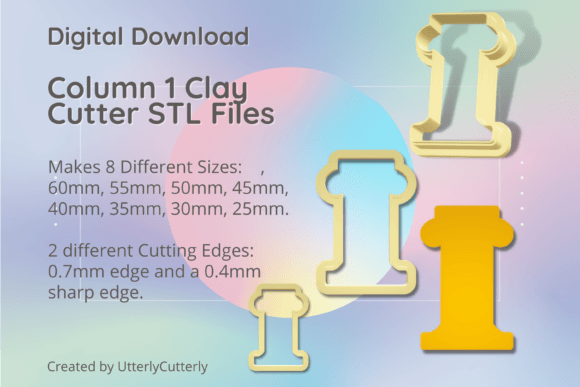
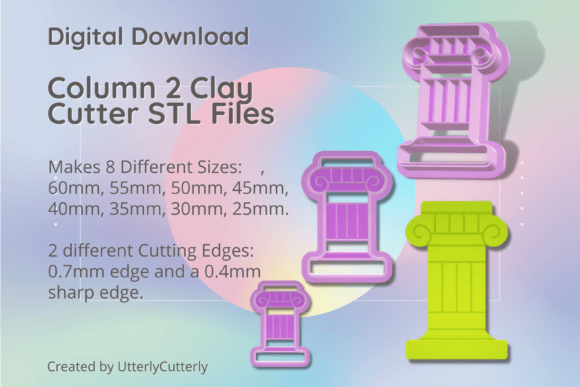
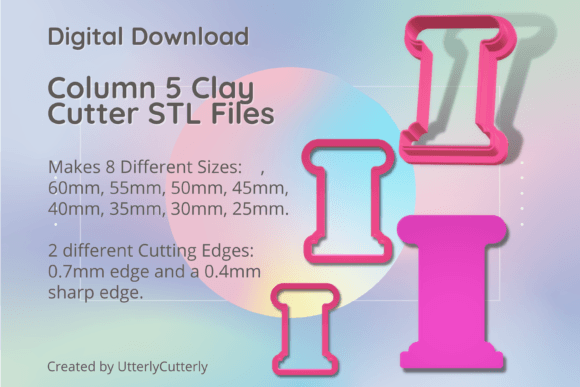
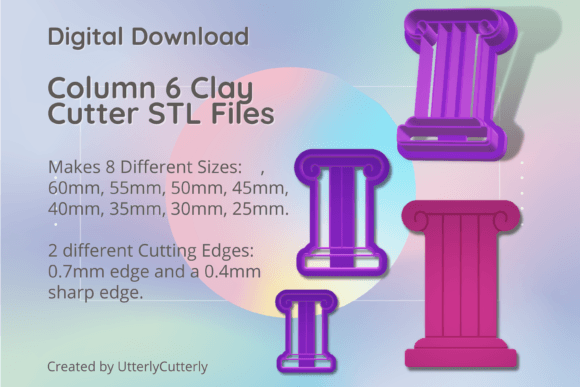
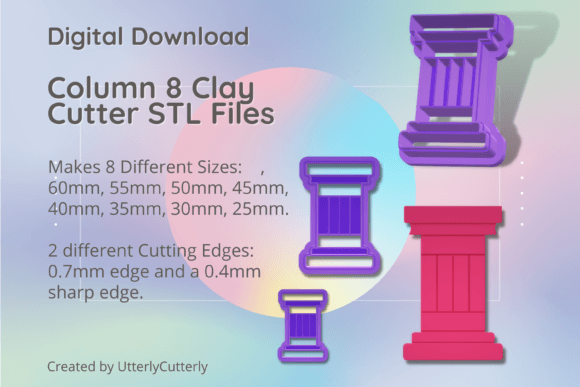
One of the most common challenges in clay work and baking is finding a cutter that matches the specific scale of the current project. A column shape that looks elegant on a necklace pendant might appear clumsy as a cake topper, while a large architectural detail would be impossible to render in earring form. This STL pack addresses that friction by offering a graduated size range: 60mm, 55mm, 50mm, 45mm, 40mm, 35mm, 30mm, and 25mm. These measurements refer to the longest ends of the cutter, ensuring you can predict exactly how the finished piece will relate to other elements in your composition.
For jewelry makers, the smaller 25mm to 35mm range is ideal for creating lightweight earrings or charm bracelets where weight distribution matters. The intricate fluting of an ancient Greek or Roman column translates beautifully at this miniature scale, provided the cutter is sharp enough to capture the detail without dragging the clay. Conversely, educators teaching history or architecture can utilize the 50mm to 60mm sizes to create tactile learning aids. Students can physically handle these larger replicas to understand structural elements like entasis or capital transitions in ways that textbooks cannot convey. Having all eight sizes available instantly means you never have to compromise on proportion because the right tool wasn't in stock.
Choosing Between Standard and Sharp Edge Profiles
The inclusion of two distinct cutter types within this digital bundle reflects an understanding that different materials behave differently under pressure. Not all clay bodies or doughs require the same blade geometry, and having options prevents material waste and frustration during production runs.
The Standard 0.7mm Wall Profile
The standard version features a 0.7mm wall thickness with a 3mm thick base and a total height of 12mm. This profile offers durability and stability, making it excellent for firmer clays or when you need a cutter that won't flex during repeated use. The slightly thicker wall creates a clean cut that is easy to release from sticky materials. For potters working with leather-hard clay or bakers using dense gingerbread dough, this robustness ensures the column shape maintains its integrity without warping. The 3mm base also provides a comfortable surface area for your thumb, reducing hand fatigue when cutting multiple pieces for a collection or classroom set.
The Sharp Edge (SE) Variant
Abbreviated as SE in the file names, the Sharp Edge variant is engineered for precision. It retains the same 3mm base and 12mm height but utilizes a 1mm support wall tapering to a 0.4mm cutting edge. This finer blade is essential for softer polymer clays, fondant, or gum paste where drag marks can ruin the surface finish. When creating high-end jewelry or detailed cake decorations, the SE profile slices through material cleanly rather than pushing it aside. This results in crisper edges and less post-processing cleanup. If you are working with translucent clays where internal distortion is visible, the SE version is typically the superior choice for maintaining optical clarity along the cut line.
Technical Considerations for Embossing and Printing
Users should note specific dimensional constraints before printing to ensure successful outcomes. If your chosen design includes embossing lines, they stand 10.5mm tall relative to the cutter base. This means the cutter is designed to work optimally with clay sheets thicker than 1.5mm. Attempting to use these embossing features on thinner material will result in incomplete impressions or potential tearing. Always condition your clay to the appropriate thickness before attempting detailed architectural textures.
Since this is a digital product, printability is paramount. Our STL files are tested before being sold to verify they slice correctly in popular software like Cura, PrusaSlicer, or Bambu Studio. The 12mm height strikes a balance between rigidity and print time; tall enough to clear most clay slabs but short enough to print quickly without excessive filament usage. When printing the SE variants, consider using a slower outer wall speed to maintain the integrity of the fine 0.4mm edge. For standard versions, typical PLA settings usually suffice, though PETG may offer better longevity if you plan to wash the cutters frequently in warm water.
Commercial and Educational Applications
Beyond individual hobbyists, these digital files serve small business owners and educators who need reliable, reproducible tools. For Etsy sellers specializing in classical-themed jewelry or wedding favors, owning the STL means you can replace worn cutters instantly without waiting for shipping. You can also scale your inventory up or down based on seasonal demand without holding physical stock. The ability to print on-demand reduces overhead and allows for rapid prototyping of new product lines.
In educational settings, teachers and museum educators can print sets of columns in various sizes to demonstrate architectural orders. A lesson comparing Doric, Ionic, and Corinthian styles becomes interactive when students can trace, mold, or compare physical models. Because the files are digital, a school district can share the resource across multiple classrooms or makerspaces, maximizing the value of a single purchase. Homeschoolers studying ancient civilizations can integrate art and history by having children create their own archaeological artifacts using these precise forms.
Expanding Your Toolkit Over Time
This Column 8 Clay Cutter - Ancient Greek Rom pack is designed to integrate seamlessly with other STL files in our growing library. New designs are added weekly, allowing you to build a comprehensive collection of complementary shapes over time. Perhaps next month you will need acanthus leaves to pair with these columns, or geometric borders for framing. By standardizing on digital files, you avoid the clutter of mismatched physical tools and gain the ability to organize your entire toolkit on a hard drive rather than a pegboard.
Remember that this listing is for digital files only; no physical item will be shipped. Access is granted immediately after payment, so you can begin printing and creating within minutes. Whether you are refining a jewelry collection, decorating a themed cake, or teaching architectural history, having the right size and edge profile makes the difference between a frustrating process and a professional result. Test both edge types with your specific material to determine which yields the best finish for your unique workflow, and leverage the full size range to bring authentic classical proportions to your modern creations.