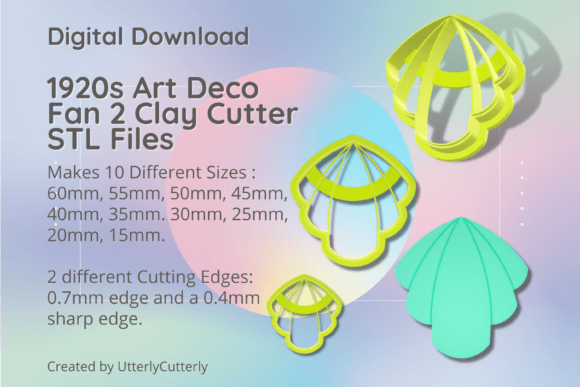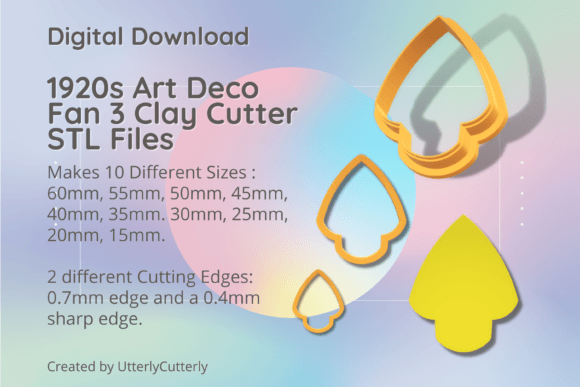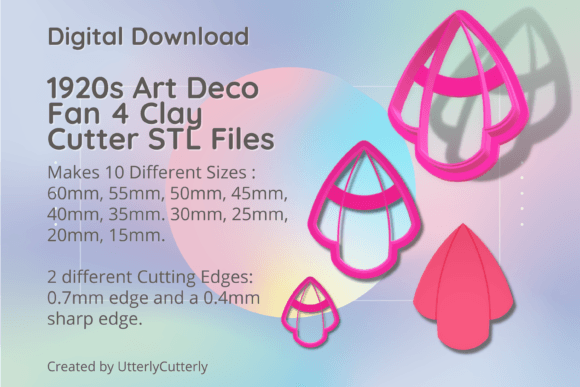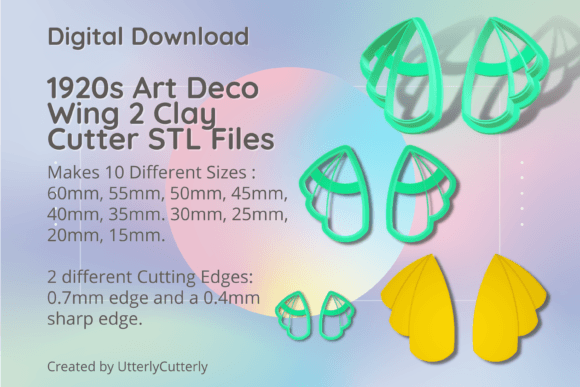
1920s Fan Clay Cutter: Art Deco Shape S STL Files
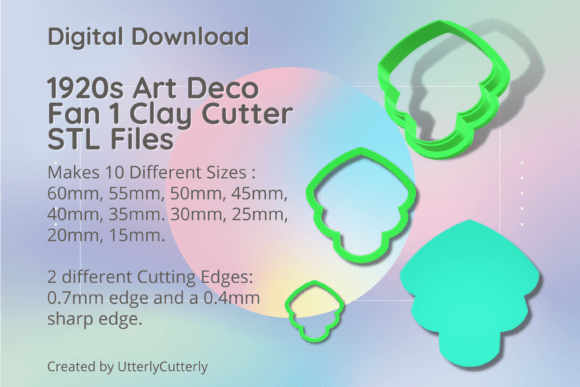
The geometric elegance of the Roaring Twenties continues to inspire modern makers, and the 1920s Fan Clay Cutter - Art Deco Shape S brings that iconic aesthetic directly to your workspace. This digital download provides a comprehensive bundle of STL files designed specifically for 3D printing, allowing you to fabricate high-quality cutters on demand. Rather than relying on mass-produced plastic tools that may warp or lack specific detailing, this digital asset empowers you to create custom instruments tailored to polymer clay, cookie dough, or fondant projects.
For creators and hobbyists, the appeal lies in the intersection of historical design and modern fabrication technology. The fan shape is a quintessential Art Deco motif, representing symmetry, luxury, and movement. By utilizing these printable files, you gain access to a versatile toolkit that bridges vintage style with contemporary making. Whether you are crafting statement jewelry, decorating themed baked goods, or teaching art history through tactile projects, having immediate access to precise, scalable cutter designs transforms how you approach your craft.
Tailoring Tools to Different Skill Levels and Goals
Digital fabrication resources like the 1920s Fan Clay Cutter - Art Deco Shape S serve distinct purposes depending on who is using them. A beginner might prioritize ease of use and forgiveness in the design, while a professional jeweler focuses on precision and edge retention. Understanding these varying needs helps determine how best to utilize the included STL variations.
For Beginners and Hobbyists
Newcomers to polymer clay or 3D printing often struggle with tools that require perfect technique to yield good results. This bundle addresses that learning curve by offering two distinct cutting edge profiles. The standard 0.7mm wall option is particularly valuable for those still developing their hand pressure control. The slightly thicker wall provides rigidity without being aggressive, making it easier to press into clay without accidentally slicing through too quickly or distorting the shape. For hobbyists experimenting with different clay consistencies, this durability ensures the tool lasts through trial and error sessions.
For Professional Makers and Small Business Owners
Entrepreneurs selling handmade jewelry or artisanal cookies require consistency and speed. The Sharp Edge (SE) variant included in this pack features a 0.4mm cutting edge supported by a 1mm wall. This specification is engineered for clean, crisp cuts that minimize post-processing cleanup time. For a business owner, reducing the time spent smoothing ragged clay edges directly impacts profitability. Furthermore, owning the STL files means you can reprint a favorite size instantly if a tool breaks or wears down, eliminating supply chain delays and ensuring your production line never stops due to equipment failure.
Educators and Workshop Leaders
In educational settings, budget and safety are paramount. Printing ten different sizes from a single digital purchase allows instructors to provide individual tools for every student at a fraction of retail cost. The range of sizes also supports differentiated learning; younger students or those with limited dexterity may find larger cutters easier to handle, while advanced students can challenge themselves with intricate miniature work using the smaller dimensions.
Technical Specifications and Practical Application
Understanding the technical parameters of these STL files ensures successful prints and optimal performance. The 1920s Fan Clay Cutter - Art Deco Shape S bundle is not a one-size-fits-all solution but a curated system designed for flexibility.
- Size Gradient: The pack includes ten incremental sizes ranging from 60mm down to 15mm. Measurements are taken from the longest ends of the fan shape. This graduation allows for nesting designs, creating layered jewelry components, or producing matching sets of cookies in varying scales.
- Standard Edge Profile: Features a 0.7mm wall thickness with a 3mm thick base and 12mm height. This robust profile offers excellent grip and structural integrity, ideal for stiffer clays or users who apply heavier pressure.
- Sharp Edge (SE) Profile: Abbreviated as SE in the file names, this version uses a 1mm support wall tapering to a 0.4mm cutting edge. It maintains the same 3mm base and 12mm height but prioritizes slicing efficiency over wall thickness.
- Embossing Compatibility: If your chosen design includes embossing lines, they stand 10.5mm tall. To capture these details effectively, ensure your clay slab is rolled to at least 1.5mm thick before cutting.
Evaluating Priorities: Cost, Quality, and Flexibility
When deciding whether to adopt digital cutter files over physical products, different priorities come into play. For some, the initial cost savings of a digital download versus buying ten separate physical cutters is the primary driver. However, long-term value extends beyond the purchase price.
Flexibility and Customization
Physical tools are static; digital files are dynamic. If you discover that a 45mm fan works perfectly for earrings but you need a 47mm version for a specific pendant setting, you have the foundation to modify the file (within licensing terms) or request adjustments. This adaptability is crucial for designers developing signature collections where standard market sizes do not align with their unique vision.
Presentation and Brand Identity
For content creators and marketers, the ability to showcase the creation process adds narrative value to the final product. Filming the 3D printing process alongside the clay cutting demonstrates technological proficiency and dedication to quality. Using distinctive Art Deco shapes helps establish a recognizable visual brand that separates your work from generic competitors.
Reliability and Maintenance
3D printed tools made from PLA or PETG are generally safe for food contact when used properly, but they are not dishwasher safe. Digital ownership mitigates the risk of loss. If a cutter is accidentally melted or damaged, replacement is merely a print job away. This reliability is essential for professionals who cannot afford downtime during peak seasons like holidays or wedding periods.
Choosing the Right Configuration for Your Project
Selecting between the available edge types and sizes depends entirely on your current objective. There is no universally "better" option, only the right tool for the specific task at hand.
- Assess Material Hardness: Soft, conditioned polymer clay or cookie dough responds well to the Sharp Edge (SE). Stiffer materials like porcelain clay or dense fondant may benefit from the standard 0.7mm wall to prevent the cutter from flexing during use.
- Determine Detail Requirements: If you plan to add surface textures or stamps after cutting, the standard edge leaves more room for manipulation without compromising the outline. If the cut edge itself is the final finish, the SE variant reduces sanding time significantly.
- Plan for Scale: Consider the end-use environment. Jewelry components typically utilize the 15mm to 30mm range, while decorative baking often requires the 40mm to 60mm spectrum. Having the full gradient available allows you to prototype across scales before committing to a final production size.
Ultimately, the 1920s Fan Clay Cutter - Art Deco Shape S represents a shift toward sustainable, on-demand toolmaking. It removes the barrier between design inspiration and physical execution, placing the capability to produce professional-grade implements directly in the hands of the maker. Whether you are preserving the glamour of the Jazz Age in clay or simply seeking a reliable, printable addition to your studio, these files offer a practical pathway to creative autonomy.