Organic Shape 1 Clay Cutter: Boho Pebble STL Files
Achieving consistent, natural aesthetics in polymer clay or cookie design often presents a technical challenge. While organic shapes are visually appealing, freehand cutting rarely yields the uniformity required for professional collections or scalable production. The Organic Shape 1 Clay Cutter - Boho Pebbl digital download addresses this specific friction point by providing precision-engineered STL files tailored for 3D printing. This resource allows makers to bridge the gap between artistic fluidity and manufacturing consistency without relying on expensive custom manufacturing or unpredictable hand-cutting methods.
This digital bundle is specifically structured for creators who own 3D printers and require immediate access to versatile tooling. Rather than waiting for shipping or settling for generic shapes, users can print exact specifications on demand. The Boho Pebble design offers a soft, irregular geometry that is currently dominant in jewelry and artisanal food trends, yet difficult to replicate manually at scale. By utilizing these tested STL files, makers gain control over their production workflow while maintaining the authentic, tactile quality that defines the boho aesthetic.
Selecting the Correct Blade Profile for Your Material
One of the most critical aspects of using 3D printed cutters is matching the blade geometry to the material's density and desired finish. This pack includes two distinct cutting edge profiles, each serving a different functional purpose. Understanding the difference prevents material waste and ensures clean results across various applications.
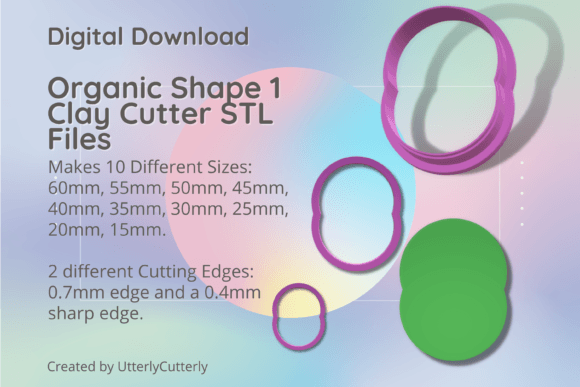
- Standard 0.7mm Wall: This cutter features a 0.7mm wall thickness with a 3mm thick base and a total height of 12mm. It is engineered for durability and ease of printing. The slightly thicker blade pushes through softer materials like cookie dough, fondant, or soft polymer clay without bending. This profile is ideal for structural pieces where edge definition is less critical than shape integrity, or when working with materials that tend to stick to thinner blades.
- Sharp Edge (SE) Variant: Abbreviated as SE in the file names, this version utilizes a 1mm support wall tapering to a precise 0.4mm cutting edge. Like the standard version, it maintains a 3mm base and 12mm height for ergonomic handling. The sharper profile slices cleanly through firm polymer clay, reducing drag and preventing distortion of delicate organic curves. This is the preferred choice for jewelry making where crisp edges minimize post-processing sanding time.
Makers should test both profiles with their specific printer settings and materials. Resin printers may capture the 0.4mm edge more accurately than FDM printers, though both are designed for accessibility. Having both options in one digital pack eliminates the need to purchase separate tools for different projects, streamlining inventory management for small business owners.
Strategic Sizing for Cohesive Collection Building
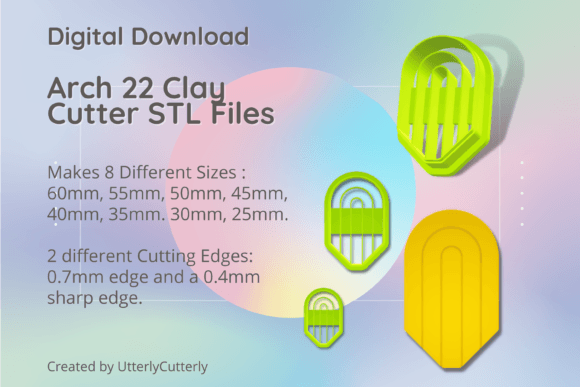
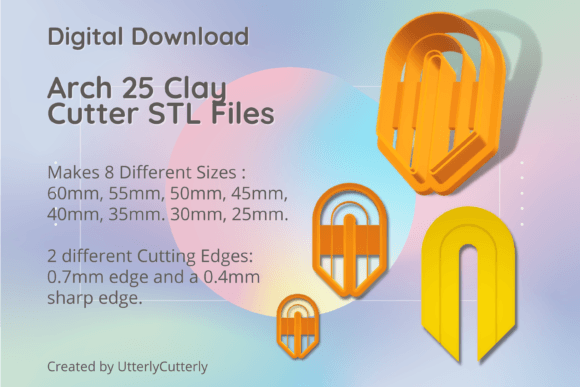
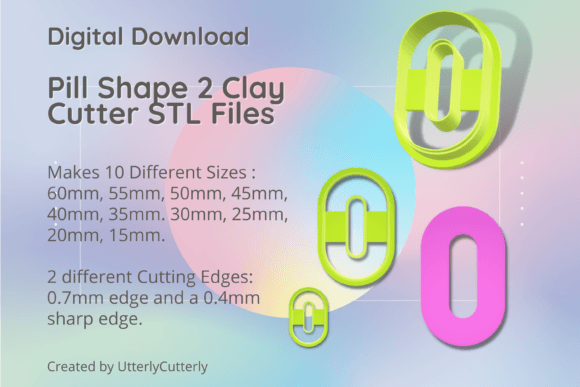
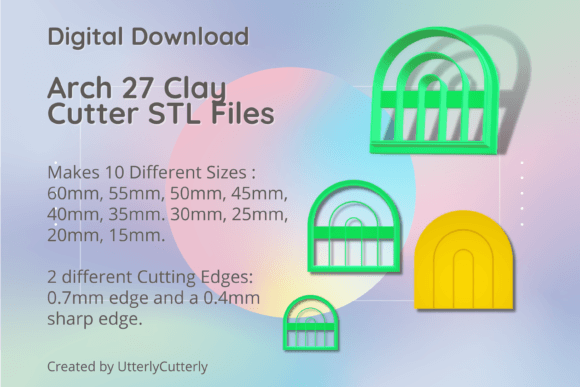
Inconsistent sizing is a common issue when curating handmade collections. A necklace pendant, earring set, and bracelet charm must relate to one another proportionally to feel intentional. The Organic Shape 1 Clay Cutter - Boho Pebbl bundle provides ten graduated sizes measured from the longest ends: 60mm, 55mm, 50mm, 45mm, 40mm, 35mm, 30mm, 25mm, 20mm, and 15mm.
This granular size progression supports several practical workflows. Jewelry designers can create nested sets or graduated earrings without guessing dimensions. Cookie decorators can produce tiered designs for wedding cakes or charcuterie boards with mathematical precision. Educators and workshop leaders benefit from having multiple sizes available simultaneously, allowing students to practice on smaller 15mm or 20mm cutters before attempting larger formats. Because these are digital files, you can print only the sizes needed for a current project, reducing plastic waste compared to buying physical sets containing unused dimensions.
The ability to mix these sizes with other STL files from our weekly releases further enhances creative flexibility. Makers can build proprietary shape libraries that distinguish their brand from competitors using mass-produced metal cutters. This modular approach to tooling supports long-term business growth and artistic evolution.
Technical Considerations for Embossing and Print Success
For users incorporating embossed details into their work, understanding dimensional tolerances is essential. Any embossing lines integrated into these designs stand 10.5mm tall. Consequently, the clay or dough must be rolled to a minimum thickness of 1.5mm to accommodate the relief without bottoming out. Working with material thinner than this threshold will result in incomplete impressions or structural weakness.
When printing these STL files, orientation matters. Print cutters with the base flat against the build plate to maximize adhesion and ensure the cutting edge remains perpendicular. For the Sharp Edge variants, consider using a brim or raft if your printer struggles with thin walls, though the 3mm base is designed to provide sufficient footprint for most standard setups. Post-print cleanup should focus solely on removing support artifacts from the interior; avoid sanding the cutting edge itself, as this alters the calibrated tolerance.
All cutters in this collection undergo testing prior to release to verify printability and functional performance. However, individual printer calibration varies. Users experiencing issues with the 0.4mm edge should verify nozzle diameter and flow rate settings. Those using resin printers should ensure proper exposure times for thin features. These files represent tested baselines, but optimal results depend on local machine tuning.
Maximizing Value Through Digital Tooling
Transitioning to digital STL files fundamentally changes how makers approach tool acquisition. Physical cutters require storage, shipping delays, and minimum order quantities. Digital downloads eliminate these barriers entirely. After payment confirmation, immediate access allows creators to respond quickly to trend shifts or client requests. If a customer needs a specific size variation for a custom order, the solution is minutes away rather than weeks.
This model also reduces overhead costs significantly. Instead of investing hundreds of dollars in physical inventory, makers allocate resources toward materials and marketing. The per-unit cost of a 3D printed cutter drops to mere cents in filament or resin after the initial file purchase. For entrepreneurs operating on thin margins, this efficiency directly impacts profitability.
Educators and content creators find additional value in the reproducibility of digital files. Tutorial videos maintain consistency when the same cutter can be reprinted if damaged during filming. Workshop participants receive identical tools regardless of when they attend. This reliability strengthens professional credibility and reduces operational friction.
It is important to note that this product is strictly a digital download. No physical items will be shipped. Buyers must have access to a functioning 3D printer and basic slicing software knowledge. Those without printing capabilities should explore local maker spaces, library services, or online printing bureaus that accept customer STL files. While this requirement adds a preliminary step, the long-term autonomy and customization potential justify the learning curve for serious makers committed to distinctive, high-quality output.
The Organic Shape 1 Clay Cutter - Boho Pebbl represents more than a single shape; it exemplifies a modern approach to craft production where technology serves artistry. By providing tested, multi-profile, comprehensively sized digital assets, this bundle empowers creators to execute their vision with confidence and precision. Whether producing jewelry, edible art, or educational content, having reliable tools removes technical uncertainty and allows focus to remain where it belongs: on creative expression and business development.